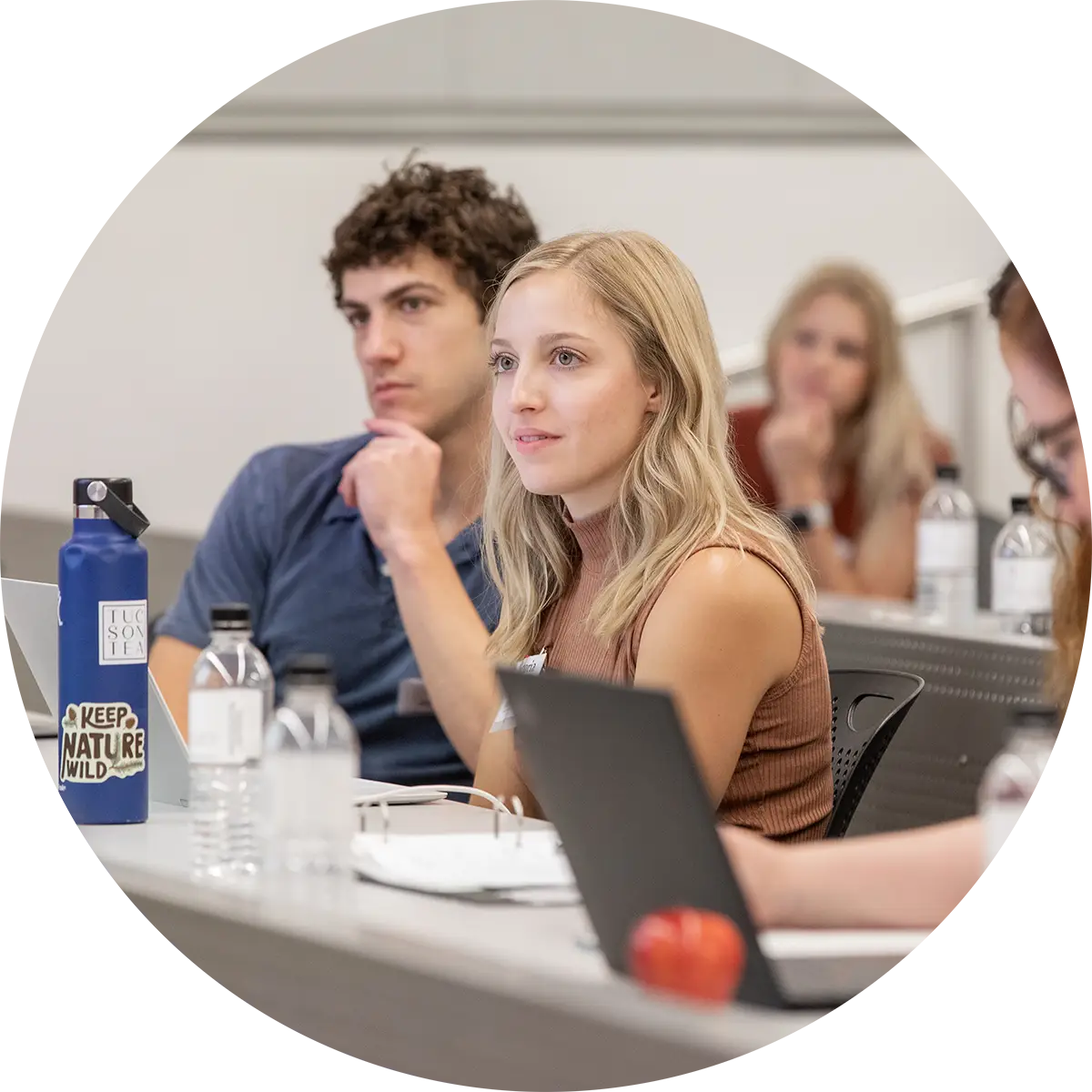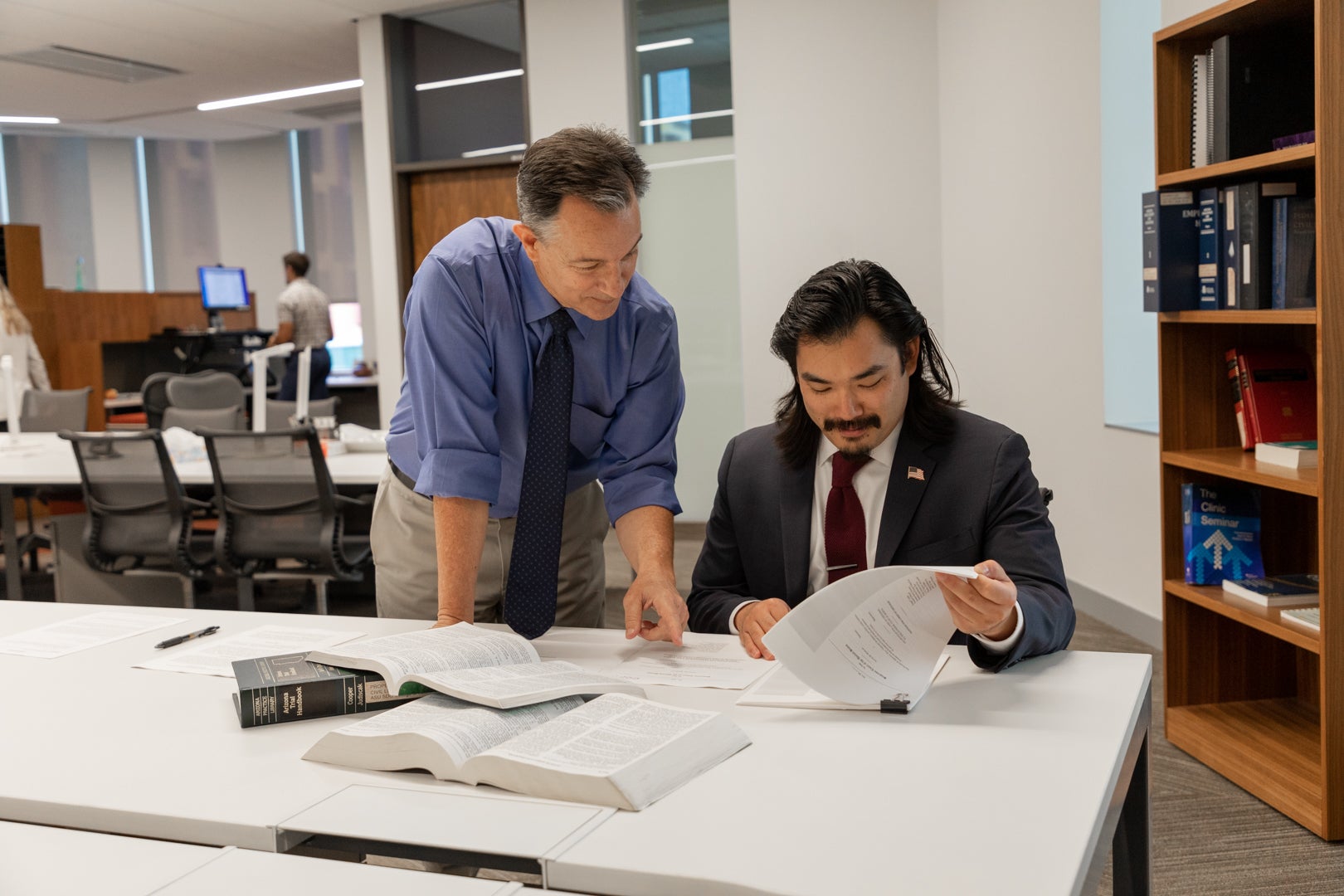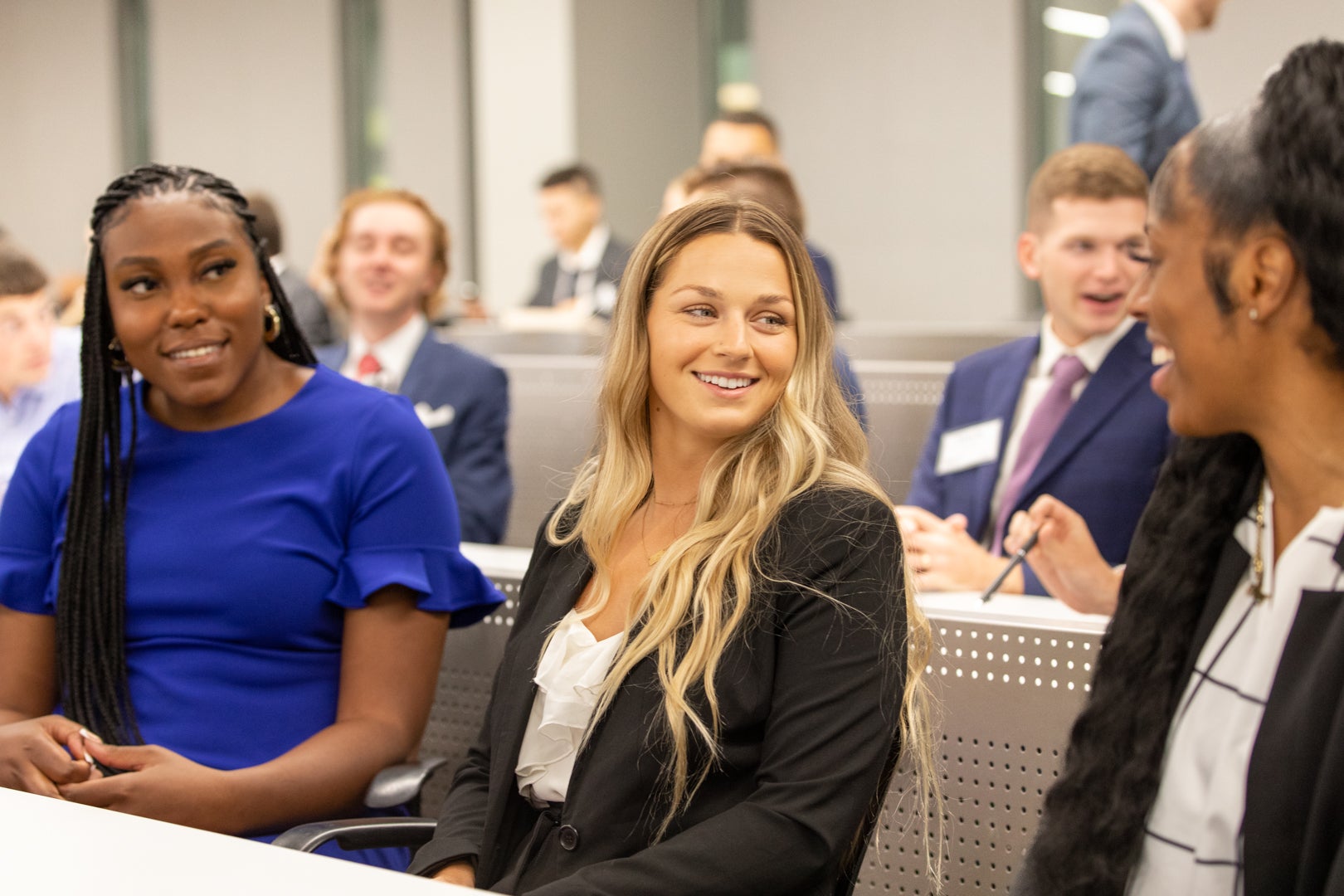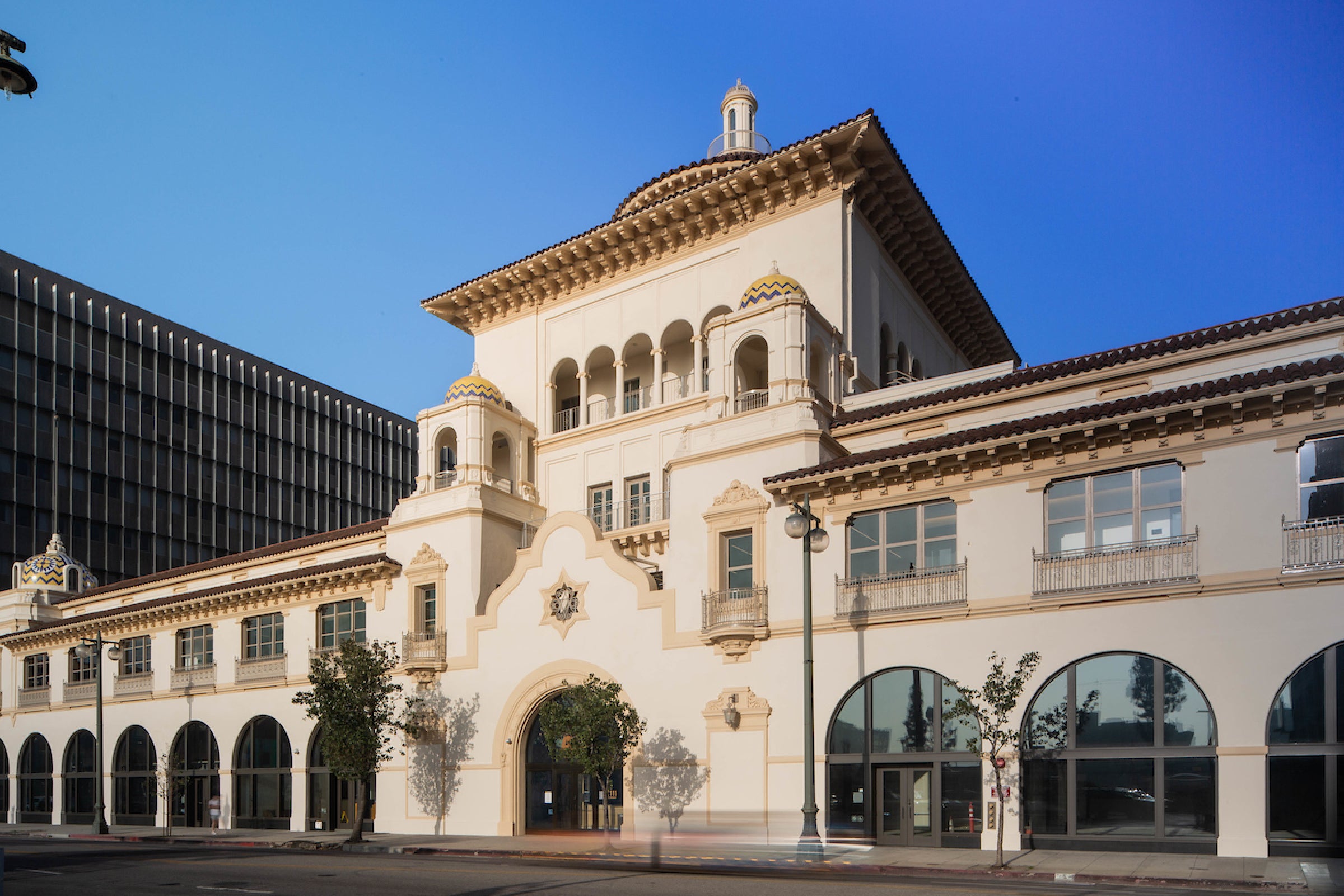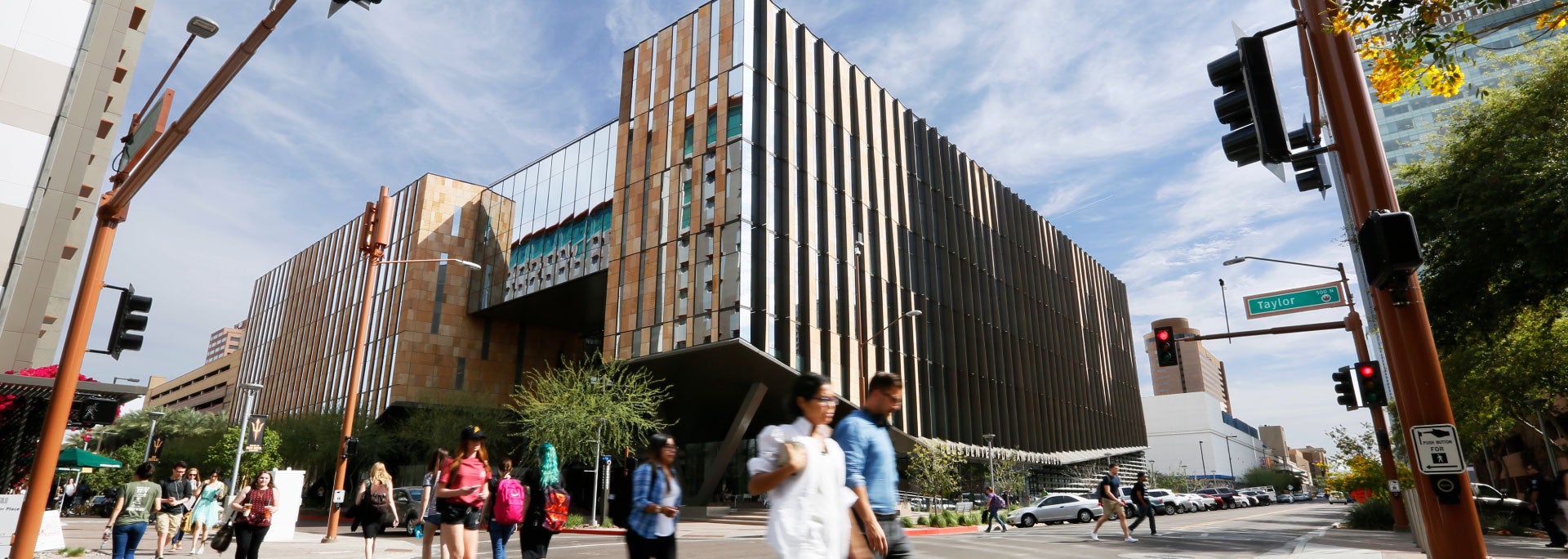
Monday morning’s Maricopa County Superior Court session was called to order not by a bailiff or judicial assistant, but by ASU College of Law Associate Dean Noel Fidel, a former superior and appellate court judge.  The venue: the College of Law Great Hall, where more than 200 law students sat with notebooks and laptops ready. 

The event was part of the “Dean’s Seminar on the Study and Practice of Law,” a series of lectures and interactions with attorneys and judges that first year law students are required to attend as part of the first year curriculum.

“It’s an attempt to give some professional and real world context to legal education, which otherwise could be fairly abstract in the first year,” said Judge Fidel.

Maricopa County Superior Court Judge Peter Reinstein took his seat in one of five chairs normally reserved for Supreme Court justices when they hold annual oral arguments at the law school’s Great Hall.  Attorney David Bell spoke first, presenting oral arguments on behalf of his client, Liberty Mutual Insurance Company.  

Bell was more than happy to prepare his oral argument for a large audience.  Other than those involved in the proceedings, civil cases typically have few people in attendance.  Bell noted how he never had the chance to witness such cases while in law school.

“Probably, for most of these students they have not seen a hearing on any sort of motion of an actual case,” said David Bell.  So, the ability I think to see two cases argued will greatly enhance their understanding of their reading of case law and what they’re writing about in classes.” 

The case Bell is litigating, Desert Mountain Properties Limited Partnership v. Liberty Mutual Fire Insurance Co., involves a claim of breach of contract, bad faith, and negligence.  Desert Mountain sought to recover expenses incurred in fixing damages to homes caused by faulty land grading and construction.   Liberty Mutual denied the claims alleging the developer knew of problems with grading and construction when it secured the insurance policy.  Bell was followed by attorney Tim Berg representing Desert Mountain Properties.  Berg asked the court for a summary judgment against Liberty Mutual for denying the claims. 

Superior Court1
Maricopa Superior Court Judge Peter Reinstein listens as attorney Tim Berg presents his arguments.

When the attorneys were done with arguments and questions by the judge, they took a seat in the audience and watched as attorneys Stephanie Chilton and Richard Shapiro presented their oral arguments before Maricopa County Superior Court Judge Janet Barton in a products liability case, Bonar v. General Motors Corporation.  

Shapiro represents Mr. Bonar, a man who received brain injuries following a rollover accident and alleged the Chevrolet SUV his client was driving was defective because the driver side door came off its hinge in the accident.  On behalf of General Motors, Chilton argued the driver’s alcohol intoxication, his overcorrection while steering, and his failure to wear a seatbelt cannot be overlooked as factors contributing to the injuries and should be admissible.  Shapiro argued what led to the accident is immaterial, what matters is the safety performance of the vehicle once the rollover took place.   

“We talk a lot about it and we read about the law for hours, but to actually get a chance to see the attorneys in action making their arguments, to get a feel for how persuasive they are or not and how the legal issues come out--it was great,” said first year law student Jonathan Batchelor.  “I hope we get the chance to do it again.”

Judge Peter Reinstein worked with Fidel to arrange the court hearings.  The goal was to give students a sense of what’s involved in preparing and arguing cases before the court.

“I wanted them to see how attorneys argue in front of the court and how to argue a real case in front of the court,” said Reinstein.  “And I hope they saw something about just how much preparation goes into a motion.”

“They all hear about what lawyers should do," Fidel said.  “Well, they saw four different styles of lawyering and that’s good.  They saw some things and maybe thought ‘I’d like to do it that way’ or others thought ‘I wouldn’t do it that way.’”

Fidel had another motive in having judges and lawyers practice law in front of students.

“I want to take some of the mystique out of the judge,” said the former jurist. Judges are just working lawyers and their aspect of the work is making decisions in these cases and the more judges of different style they can see in action the better it is--so they aren’t mystical figures steeped in the past like Oliver Wendell Holmes.  They’re just ordinary folks who have this role in the process.”

Superior Court Judge Janet Barton agrees. 

“I think we have to demystify the system so that people can see we are human beings, we do have senses of humor.  And a lot of people get that off of what they see on TV and it’s really nothing like what you see on TV.” 

Once oral arguments were over, Judges Barton and Reinstein and attorneys in both cases took questions from law students.  They stayed after the hearing to speak individually with students about the practice of law.

“I never got to see anything like this when I was in law school,” said attorney Stephanie Chilton.  I wanted to do something that would really press upon students that this is something that you’re really going to do when you get out of law school.”

Chilton drew a group of students around her following the hearing and took the time to answer specific questions about the case and her approach.  Chilton says she does the same thing for clerks and new attorneys at her firm, Bowman and Brooke.

“I try to impart what little bit of wisdom I may have about having practiced if I can to help them along.”

Chilton students 
Stephanie Chilton discusses her case with ASU College of Law students.

One way Chilton tried to help students was by creating a PowerPoint presentation so students could visually follow arguments.  But computer problems prevented Chilton from using her laptop.  Despite being adversaries, Shapiro lent Chilton his computer and together they figured out a way to display her presentation on his computer.  The degree of professionalism was not lost on Judge Fidel.

“It was nice to see how adversaries can be more than civil and cooperate and be helpful to each other.”